Water Damage Restoration in Derby, CO
Derby was a Burlington railroad stop by 1887, elected a mayor in 1926 without ever being a town, and was annexed into Commerce City in 1962, which quadrupled that city's population overnight. The old Derby core around 72nd Avenue and Monaco Street is the oldest housing on the north side of the metro: 1920s to 1950s frame bungalows and small brick ranches on crawl spaces and shallow basements, many with their original cast iron drains and galvanized supply lines still in the walls. Derby sits on the flat ground between the South Platte and the old arsenal, and the water table under it is close.
This site puts Derby homeowners through by phone to an independent local water damage provider.
A Derby crawl space is often two feet of dirt and cobwebs under a floor that was never insulated, and water down there can sit for weeks unnoticed until the floorboards above it start to cup. If a floor in the house has gone soft or wavy since the last storm, ask the crew to check the crawl space first, before anyone looks at the walls.
Derby water damage in a 1940s bungalow
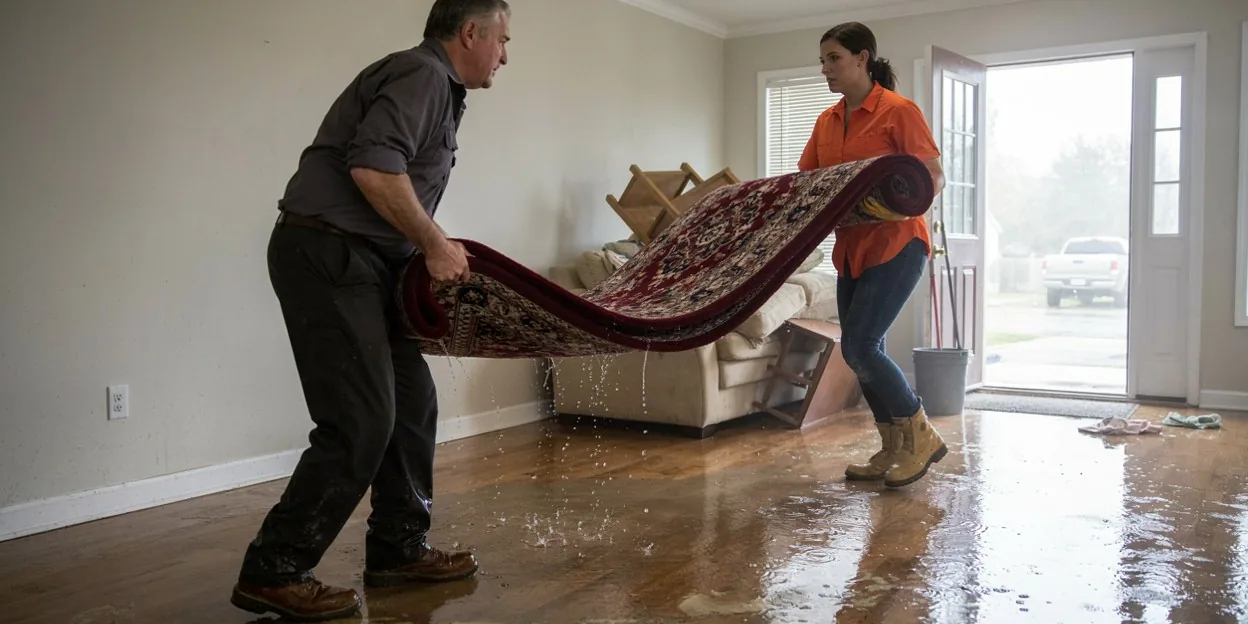
A crawl space that took water and left the floor above it cupping is a water extraction job followed by structural drying. A galvanized line that rusted through at a fitting behind the bathroom wall is burst pipe water damage. A 1950s roof that lost tabs in a hailstorm is roof leak and hail water damage.
Derby's old downtown and the city that took it in
Commerce City is rebuilding the Derby Downtown District around 72nd Avenue, and the Commerce City Historical Society keeps the record of the railroad town it grew from. Rebuild permits for a Derby address are Commerce City permits, filed downtown, not Adams County's.
Call (720) 735-3725 and describe what you found. An independent local water damage provider serving Derby takes the call.
Services Available in Derby
Basement Flooding Cleanup
Water pumped out of a finished or unfinished Thornton basement, then the bottom of every wall and the slab metered to see what stayed wet.
Water Extraction
Standing water pulled off carpet, tile, wood, and concrete on any floor of the house, with the first moisture readings taken the same visit.
Structural Drying
Air movers and dehumidifiers set from daily readings until subfloor, studs, and drywall reach their dry target in a dry-climate house.
Frozen Pipe Cleanup
Cleanup after a supply line froze in a garage wall, crawl space, or north-facing wall during an arctic night and split when it thawed.
Burst Pipe Water Damage
A failed supply line, a cracked fitting, or an old galvanized run in a 1950s ranch let go, and the rooms it soaked get pumped out and dried.
Water Heater Leak Cleanup
The tank in the basement utility corner rusted through overnight, and the floor, framing, and stored boxes it soaked get dried out.
Roof Leak and Hail Water Damage
Wet attic insulation, ceilings, and walls dried after a hailstorm, a wind-torn shingle, or an ice dam let meltwater into the house.
Leak Detection
A high Thornton Water bill, a warm patch on a slab floor, or a damp spot with no visible source tracked to the pipe behind it before walls open.